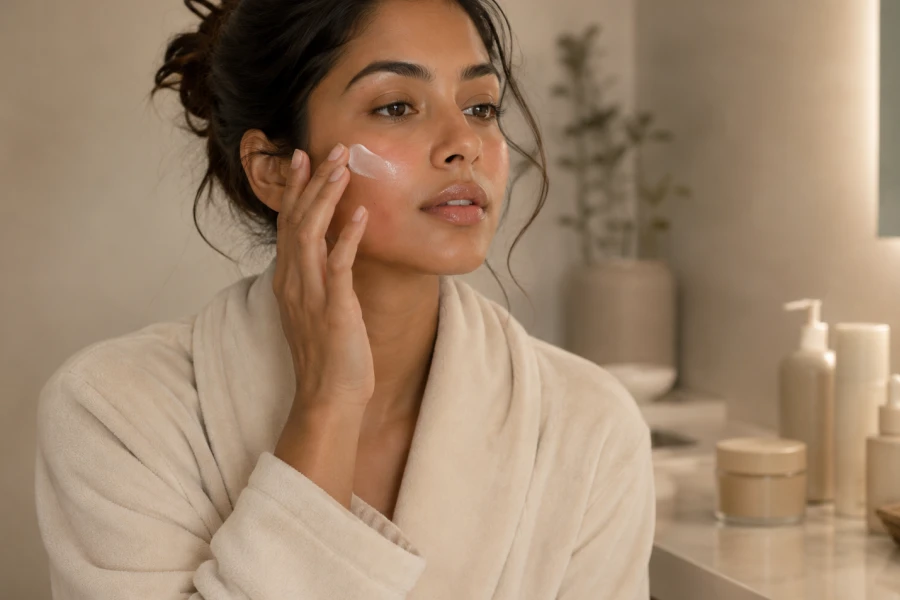
A skin barrier comfort routine gives irritated skin a clear path back to ease. Reactive days feel worse when every choice seems risky. The face may sting, flush, itch, or feel tight. A structured routine removes the guesswork. It focuses on gentle cleansing, steady moisture, and trigger control. It also avoids unnecessary experiments. The goal is not perfection. The goal is less discomfort and more predictability. Small actions can create real relief. Barrier care becomes practical when it feels repeatable.
Cleansing should never feel like punishment. Irritated skin needs a soft reset, not aggressive removal. Use lukewarm water and light pressure. Skip scrubs while the barrier feels stressed. Avoid cleansing repeatedly out of anxiety. Too much washing can increase tightness. A mild approach helps preserve comfort. Readers exploring skin barrier repair should begin here. Clean skin should feel calm afterward. That feeling matters more than squeaky freshness.
Moisture helps irritated skin feel less exposed. A good moisturizer reduces the sensation of tightness. It can also soften rough, stressed areas. Application should be slow and gentle. Press product instead of dragging it. Use enough to feel comfortable, not coated. Let the skin settle before adding anything else. This pause helps reveal tolerance. Moisture works best when paired with restraint. Comfort grows through repetition.
Redness often makes people rush. That rush can lead to product overload. A calmer response starts with reducing heat and friction. Cool surroundings may help skin feel steadier. Soft fabrics can prevent extra irritation. Makeup should be optional during strong reactions. If used, removal must stay gentle. A redness calming routine should feel boring and consistent. Redness may fade at its own pace. The routine should not add new stress.
Strong actives can be useful and still overdone. Retinoids, acids, and brightening treatments need respect. When irritation appears, pause them temporarily. This is not a permanent failure. It is a recovery decision. Keep the routine plain until comfort returns. Restart slowly when skin feels stable. Use fewer nights than before at first. Watch for early warning signs. Barrier comfort should guide the schedule.
Skin reactions often look random until tracked. Notes reveal connections you may miss. Record new products, weather, stress, and treatments. Add photos only if they help you stay objective. Avoid checking so often that anxiety rises. A balanced method using AI skincare tracking can organize clues. Technology should support judgment, not replace it. Patterns help prevent repeated flare-ups. Better information creates calmer decisions. Your routine becomes easier to adjust.
Seasonal changes can challenge even steady skin. Cold air may increase dryness. Heat and humidity may increase flushing. Wind can make skin feel raw. Indoor heating can create tightness overnight. Adjust the routine before irritation becomes severe. Add moisture when dryness appears early. Reduce harsh treatments during vulnerable weeks. Protect the face from friction outdoors. Seasonal awareness keeps comfort more stable.
Recovery has its own boundaries. Do not scrub away texture. Do not layer several new products. Do not chase instant results with strong treatments. Avoid hot water when skin feels reactive. Pause fragrance if it seems suspicious. Keep tools and towels clean. Give each change time to show results. The hardest step is often patience. Yet patience protects the barrier best.
Prevention makes reactive days less intimidating. Keep a simple routine available at all times. Know which products feel safe during stress. Use actives only when skin can tolerate them. Reduce friction before irritation becomes obvious. Track reactions without obsessing over them. This creates a calmer relationship with skincare. The face feels less like a mystery. Comfort becomes easier to restore. A steady routine gives confidence back.




Leave a comment