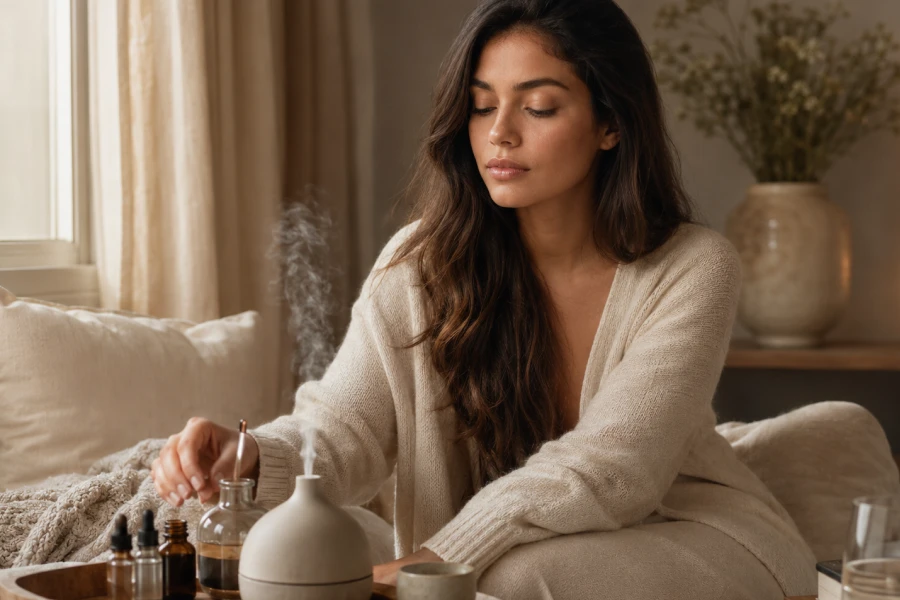
An aromatherapy routine for stress relief can make demanding days feel more manageable. Stress often builds through small moments rather than one dramatic event. A tense email, crowded schedule, or noisy room can shift the body quickly. Scent gives the mind a simple reset cue. It cannot remove responsibilities. It can help create a calmer response. That difference matters during a busy workday. The routine should be practical, subtle, and repeatable. Personal preference matters deeply. Relief feels stronger when the ritual fits real life.
A cue turns scent into a habit. Without one, aromatherapy becomes random and forgettable. Choose a moment that already happens daily. Starting work, closing a laptop, or taking lunch can work well. Pair that moment with one consistent aroma. Over time, the scent signals a mental shift. This structure strengthens stress relief rituals without adding complexity. The cue should feel natural. A useful ritual blends into the day. Calm grows through repeated association.
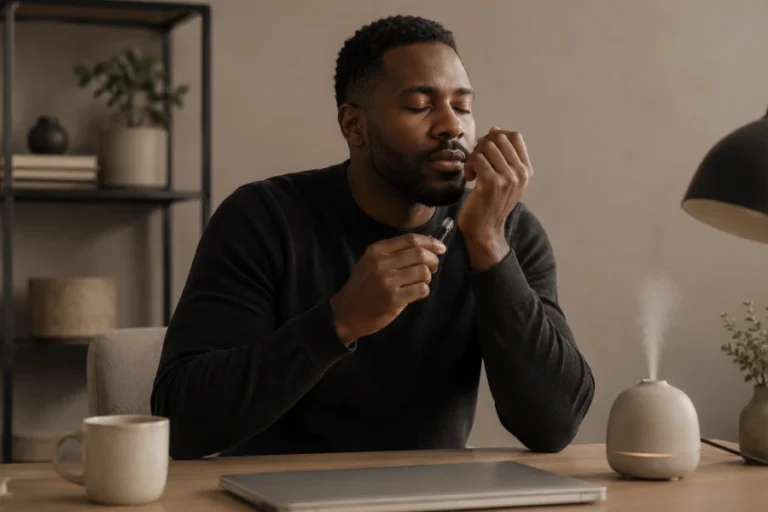
Strong fragrance can become another stressor. Shared spaces require extra consideration. Choose soft scents and controlled application methods. A personal inhaler may work better than a room diffuser. A scented balm can stay close and private. Always respect allergies, preferences, and workplace rules. The best routine helps without announcing itself. Subtlety also supports consistency. You should not dread using it. A gentle aroma can still create a powerful pause.
Stress often scatters attention. A scent ritual can mark the start of focused work. Choose an aroma that feels clean and steady. Use it before planning your next task. Take several slow breaths before opening messages. Let the cue separate reaction from action. This practice pairs well with focus boosting scents that match your preferences. The goal is not forced productivity. It is a calmer entry point. Focus improves when the nervous system feels less rushed.
Meetings can leave mental residue. A short reset prevents that residue from carrying forward. Stand, stretch, and change the air around you. Use a light scent cue if appropriate. Breathe slowly before reviewing the next agenda. Keep the routine under two minutes. That makes it easier to repeat. Small transitions protect attention and mood. They also create a sense of control. The workday feels less like one long sprint.
The tool should fit the environment. Diffusers work well at home offices. Sprays can refresh a room quickly. Roll-ons feel portable and discreet. Candles require caution and supervision. Some spaces need scent-free alternatives. A lesson in diffuser techniques can prevent overpowering the room. Use less scent than you think. Good aromatherapy should feel balanced. The setting decides the best method.
After work, scent can help mark release. This matters when home and work share space. Choose an aroma that differs from your focus scent. Use it while tidying the desk or changing clothes. Let the ritual signal that work has ended. Keep screens away for a few minutes. Give your body time to downshift. The routine should feel like a threshold. That boundary supports evening calm. Rest begins with a clear ending.
No scent works perfectly for everyone. Personal history changes how aromas feel. One person may find mint refreshing. Another may find it sharp or distracting. Test gently before committing to a routine. Notice mood, comfort, and any sensitivity. Keep favorites simple and easy to access. Avoid using too many scents in one day. A smaller scent wardrobe feels clearer. Your response is the best evidence.
Long-lasting routines stay flexible. Some days need a quick breath cue. Other days invite a longer evening ritual. Do not measure success by complexity. Measure it by whether you return to the practice. Keep supplies organized and visible. Refresh scents when they lose emotional impact. Change the routine when life changes. A useful ritual supports your nervous system gently. Stress feels less dominant when calm has a cue.



Leave a comment