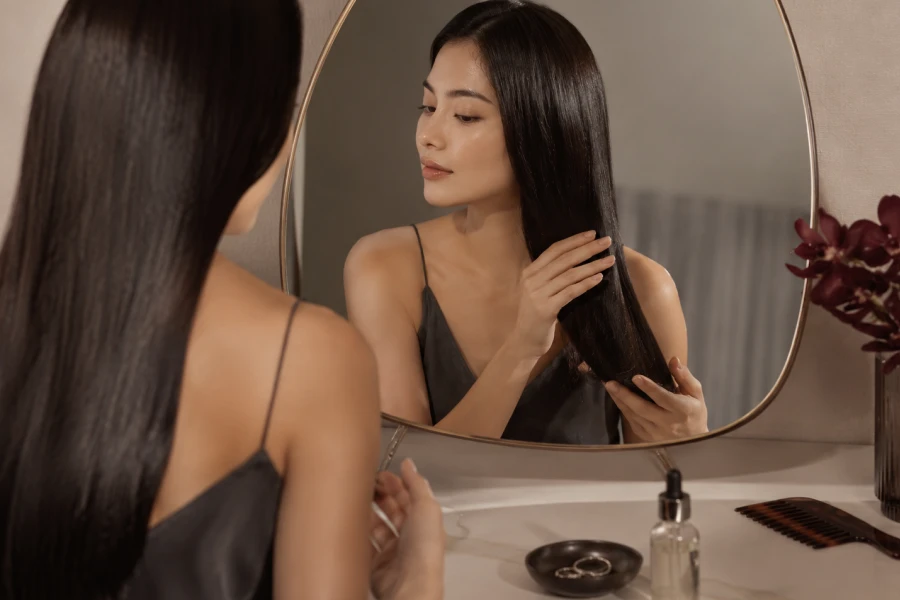
Personalized hair oil care respects the fact that no two textures behave the same. Real hair changes with weather, products, sleep, and styling. Generic advice often ignores those moving parts. That is why many routines work briefly, then fail. A personalized approach begins with observation. It asks what your hair does after washing. It notices where frizz begins first. It tracks whether shine lasts all day. Those details create better decisions. Hair care feels easier when it matches reality.
Observation sounds simple, but it changes everything. Look at how your hair dries naturally. Notice whether the crown, ends, or surface frizzes first. Watch how your style changes after commuting. Pay attention after workouts or humid afternoons. These patterns reveal where support belongs. They also prevent overusing oil everywhere. A habit of hair health tracking turns vague frustration into usable information. Better choices come from specific clues. Your texture becomes easier to understand.
Waves, curls, coils, and straight hair all need different handling. Even within one head, texture can vary. The front may feel finer than the back. Ends may absorb oil faster than roots. Damaged areas may need gentler treatment. This is why copying someone else rarely works perfectly. Your best routine may look slightly unusual. That does not make it wrong. It makes it honest. Texture care improves when comparison fades.
Buying more products can feel productive. Often, it only creates more confusion. Personalization helps you identify what actually earns space. You learn which oil weight fits your strands. You learn when application helps most. You also learn when hair needs cleansing instead. This prevents layering product over the wrong problem. A targeted personalized hair care routine can simplify the shelf. Fewer choices may create better hair days. Confidence grows when products have purpose.
Flyaways need precision, not panic. They often appear where friction happens repeatedly. Hats, pillows, brushes, and collars can all contribute. A tiny oil amount can soften visible disruption. Apply with fingertips instead of full palms. Touch only the raised areas. Then let the product settle before adding more. This keeps the finish light and realistic. Readers exploring flyaway control solutions should prioritize placement. Precision keeps shine from turning greasy.
Memory is unreliable after several styling experiments. You may forget how much product worked. You may also forget the weather that day. Notes help connect results to real conditions. Keep entries short enough to maintain. Record wash timing, oil amount, and final look. Add one photo when possible. Review patterns before changing products again. This makes routine updates more rational. Calm decisions usually create better styling outcomes.
Seasonal shifts can change hair quickly. Cold air often increases dryness. Summer humidity can increase surface expansion. Indoor heat may make ends feel rough. Travel can introduce harder water or different climates. Your routine should respond without becoming complicated. Adjust amount before changing the entire product lineup. Move oil placement when certain areas react. Give each change several days. Adaptation protects progress from seasonal frustration.
Good hair days feel better when they are repeatable. A personalized method makes that more likely. You stop treating every morning as a mystery. You understand what your hair usually needs. That knowledge reduces stress before styling begins. It also makes shopping more intentional. Advice becomes useful only when filtered through experience. Your routine becomes a conversation with your texture. Progress appears in small reliable wins. Those wins make care feel rewarding.
Long-term care is a skill, not a product hunt. You learn from every successful application. You also learn from every heavy, flat result. Mistakes become information instead of proof of failure. That mindset keeps the process patient. It also supports healthier expectations. Hair will not behave identically every day. Still, it can become more manageable. The right approach gives you tools. Real texture deserves that kind of respect.


Leave a comment